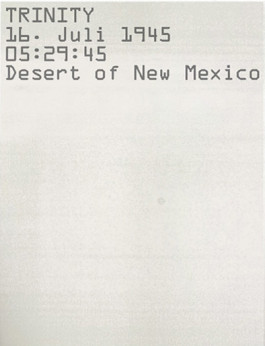

On 16 July 1945 at 05:29:45 the Manhattan Project (code name for the US atomic weapons development project) led by J. Robert Oppenheimer conducted the so-called TRINITY-TEST in the Desert of New Mexico. The GADGET, as the scientists called the atomic bomb, was the most powerful weapon of mass destruction known to mankind at that time.
It was detonated on a 30.5-metre-high steel tower at the White Sands Missile Range and had a diameter of about 1.5 metres. The explosion spread within the first millisecond. The shock wave could still be felt 160 kilometres away, and the mushroom cloud typical of atomic bombs reached a height of 12 kilometres. The explosion left a crater 3 metres deep and 330 metres wide.

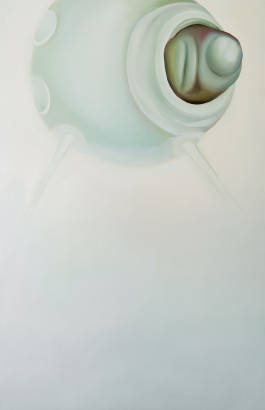
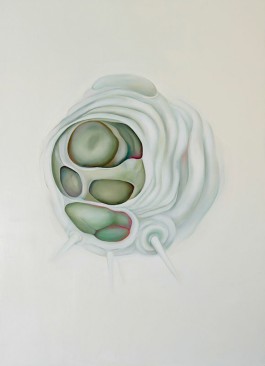
Trinity I, 2012, Öl auf Holz
J.R. OPPENHEIMER – A MODERN ICARUS
The story of J. Robert Oppenheimer describes the human dilemma of being torn between two irreconcilable poles: the desire for greatness and the desire to be at peace with the world. What did Oppenheimer feel as he watched the explosion? There is obviously a mysterious state of mind that people can fall into. An irresistible urge that makes them incapable of seeing the big picture.
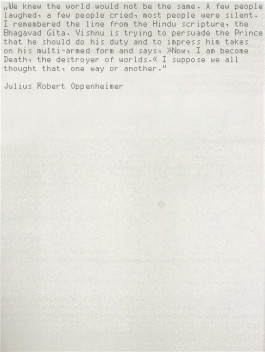
Oppenheimer later said that the moment of the explosion reminded him of verses from the Hindu scripture, the Bhagavad-Gita. Here, Vishnu (an avatar of God) reveals himself in all his glory to the warrior prince Arjuna. The narrator describes the many-armed, pure face of God as follows:
“If the radiance of a thousand suns were to burst at once into the sky / That would be like the splendour of the Mighty One... / Now I am become Death, the destroyer of worlds.
(Bhagavad Gita)


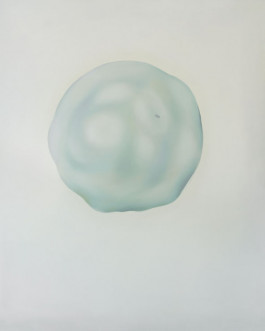
TRINITY II, 2012, 140 x 90 cm, oil on woodpanel
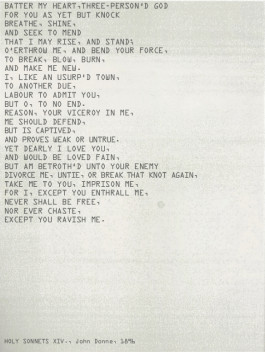
HOLY SONNET XIV, John Donne, 1896
On 16 July 1945 at 05:29:45 in the desert of New Mexico the greatest weapon of mass destruction known to mankind up to that point had been detonated. Julius Robert Oppenheimer, head of the "Manhattan Project" (codename for USA's nuclear weapons development project), gave this test the name "TRINITY" in reference to a poem by the mystic writer John Donne.


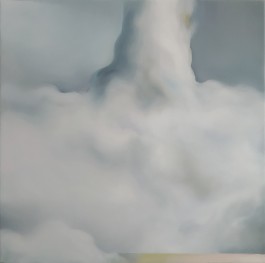
TRINITY III, 2012, 125 x 100 cm, oil on woodpanel
Peace or Escalation
The question was whether the atomic bomb would ultimately bring peace or escalation. After the American`s attacks on Hiroshima and Nagasaki on 6 and 9 August, the weapons of mass destruction led to Japan‘s surrender on 15 August 1945, ending World War II – but at a terrible cost of an estimated 200,000 lives.
The irony is that German physicists at the time did not conduct any serious research into the development of the bomb and were even convinced that reports of their colleagues‘ work in the United States were pure propaganda. The ‘nuclear arms race’ did not actually exist during the Second World War. Although a petition circulated among the scientists involved in the project asking that the bomb should not be used against the civilian population, as this was both immoral and unnecessary, Oppenheimer rejected this, and the destructive catastrophe we all know about ensued. Although he later confessed to being horrified and guilty, he merely stated
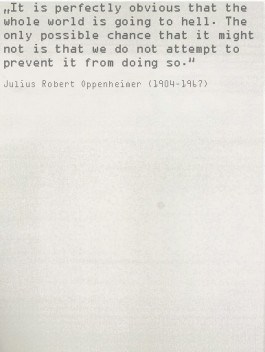
„In some sort of crude sense which no vulgarity, no humour, no overstatement can quite extinguish, the physicists have known sin; and this is a knowledge which they cannot lose.“ J. Robert Oppenheimer


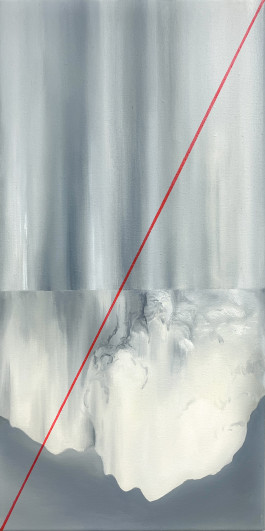
NOPE, 2024, 60 x 30 cm, oil on canvas