
Talking about J.R. Oppenheimer – a modern Icarus
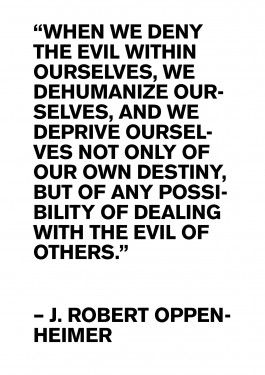
The story of J. Robert Oppenheimer is probably the most striking example of the human dilemma – being torn between two poles – the ego's desire for greatness and the desire to be at one with the world and in peace. What is the driving force that strives us to reach the highest heights? And do these heights even exist?
What did Oppenheimer see or feel when looking at the explosion? There‘s probably a mysterious state of loosing willpower people sometimes fall into – an urge, an inner heat that makes us unable to see clearly and think about the bigger picture. He later said that when he saw the explosion, he thought of the following verses from the Indian Bhagavadgita, where Krishna (an avatar of God) reveals itself in full splendor to the warrior prince Arjuna. The narrator describes the multi-armed pure visage of God as follows:
“If the radiance of a thousand suns
Were to burst at once into the sky
That would be like the splendour of the Mighty One...
I am become Death,
The shatterer of worlds.
(Bhagavad Gita)

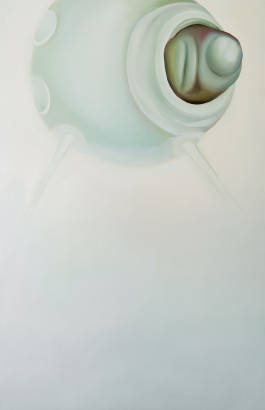
Trinity I, 2012, Öl auf Holz
Trinity-Test. A choice.
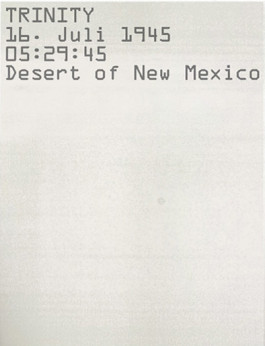
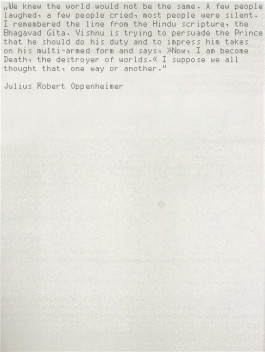
The TRINITY-SERIES was inspired by photos of the first billionths of a second of the world‘s first atomic bomb test – the TRINITY-TEST conducted by the United States Army and captured by Harold Edgerton on 16 July 1945 at 05:29:45 in the New Mexico desert.

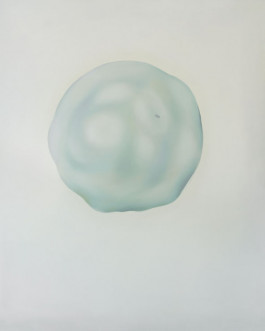
TRINITY II, 2012, 140 x 90 cm, oil on woodpanel
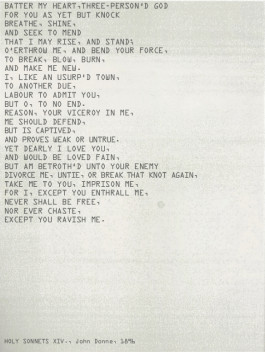
On 16 July 1945 at 05:29:45 in the desert of New Mexico the greatest weapon of mass destruction known to mankind up to that point had been detonated. Julius Robert Oppenheimer, a man of great philosophical interest and head of the "Manhattan Project" (codename for USA's nuclear weapons development project), gave this TEST in reference to a poem by the mystic writer John Donne the name "TRINITY". "Batter my heart, tree-personed god (...) " , HOLY SONNET XIV, John Donne, 1896


TRINITY III, 2012, 125 x 100 cm, oil on woodpanel
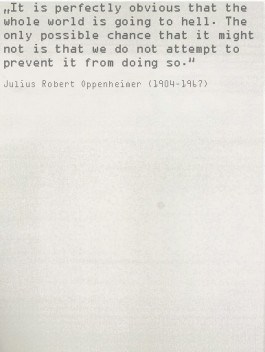


The ethical question was whether the Atomic Bomb would finally bring peace —or escalate the Second World War. After the American attacks on Hiroshima and Nagasaki on 6 and 9 August, the weapons of mass destruction led to the Japanese surrender on 15 August 1945, but at an horrific cost: an estimated more than 200,000 lives.
The irony of it all is that the German physicists of the time didn't do any serious research in this field and were in fact convinced that the reports they heard about their colleagues' work in the United States were mere propaganda. The "nuclear arms race" didn't actually exist during World War II and was run only by one side. Despite the fact that a petition was circulated among scientists of the project, pleading not to use the bomb against civilian populations, as it would be both immoral and unnecessary, Oppenheimer opposed it and the infamous destruction we all know of ensued. Although he later confessed feeling horrified and guilty, he never seems to have expressed any real regrets to have headed this programme of destruction. He merely stated that:
„In some sort of crude sense which no vulgarity, no humour, no overstatement can quite extinguish, the physicists have known sin; and this is a knowledge which they cannot lose.“ J. Robert Oppenheimer

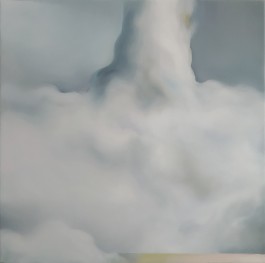
3,2,1.., 2024, 50x50 cm, oil on canvas

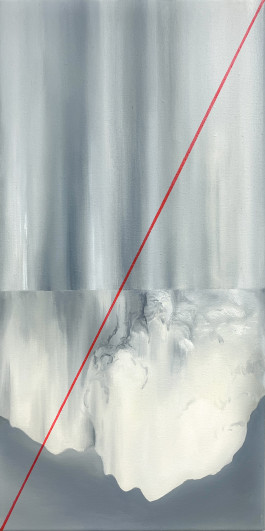
NOPE, 2024, 60 x 30 cm, oil on canvas